
The new Canada-US trade war: political implications
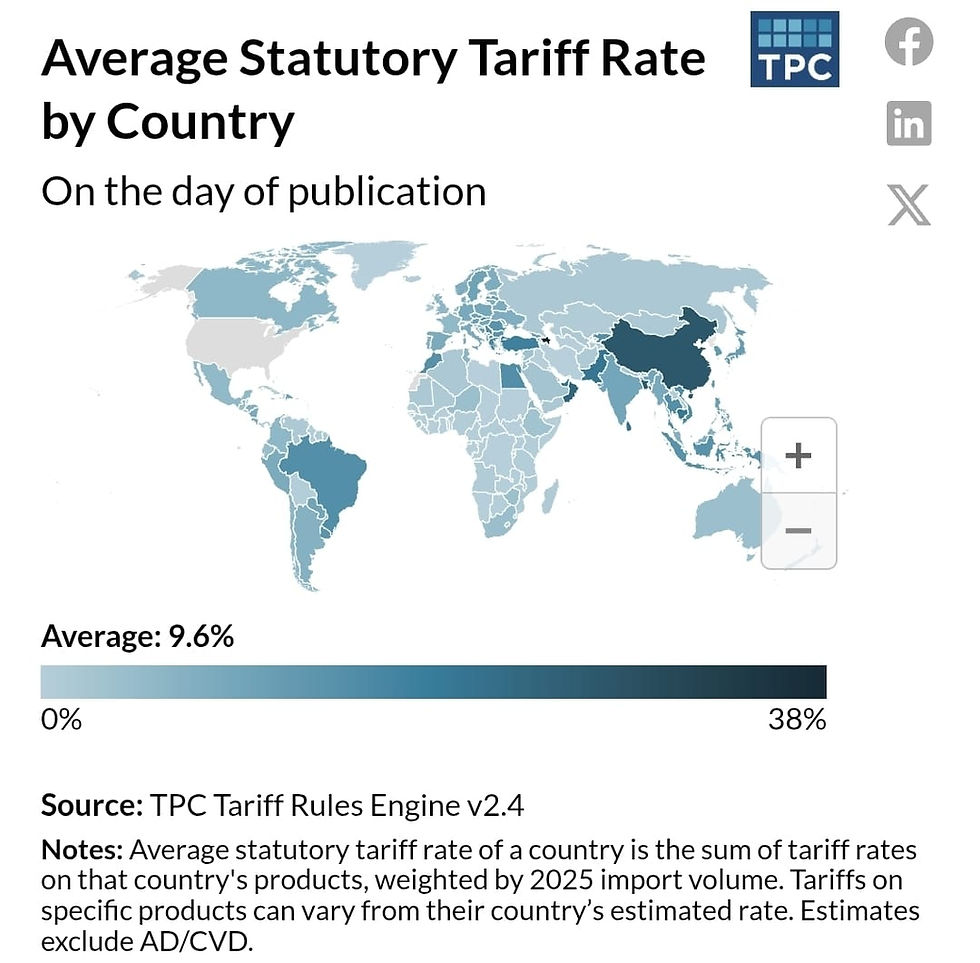
The United States and Canada are now officially engaged in a trade war. After Ottawa pulled out of negotiations last Friday, Washington imposed 50% tariffs on approximately $20 billion worth of Canadian products, including wine, furniture, dairy, cement, clothing, fishing rods and hockey equipment.
Therefore, the newly targeted goods represent approximately 5.2% of Canada's goods exports to the US ($20bn ÷ $381.9bn).
Canadian Prime Minister Mark Carney and the country’s central bank governor between 2008 and 2013, said Canada would respond with tariffs of up to 50% on $20 billion of US imports beginning next month.
This represents around 7% of Canada's imports from the US.
In retaliation, President Trump intends to impose 50% tariffs on Canadian cars, trucks and auto parts from January 1.
A key issue was Washington’s demand that medium- and heavy-duty trucks be excluded from the proposed tariff reductions. This would affect some of the country’s most popular vehicles, including the Ford F-Series and Chevrolet Silverado, which are manufactured in Ontario. The automotive industry is crucial to Ontario’s economy, generating 18% of the province’s export earnings.
Washington also demanded that Canada remove requirements for bilingual French-English labels and instruction manuals, which American companies have long argued add to their manufacturing expenses.
The protection of the French language has been central to Quebec politics for decades. Concerns over the status of French helped drive Quebec nationalism from the 1960s onward and contributed to the creation of the separatist Parti Québécois (PQ). The issue remains politically sensitive for Carney, with several elections taking place in Canada this fall, including Quebec’s provincial election. Current polling suggests the PQ could be on course to form the next Quebec government.
For Carney, weakening protections for French would therefore carry a significant political cost, something Washington is presumably aware of. US Trade Representative Jamieson Greer referred to the issue on Monday, arguing that Washington had offered Canada a favorable agreement but that Ottawa rejected it “perhaps for political reasons,” pointing to the approaching elections.
However, making French-language policy a central reason for the collapse of the negotiations could also revive longstanding regional tensions within Canada. Alberta has traditionally been frustrated by what some residents regard as Ottawa’s preferential treatment of Quebec. Among their complaints are the federal equalization system, which transfers tax revenues from wealthier provinces such as Alberta to less wealthy provinces such as Quebec to finance public services, as well as environmental policies associated with Quebec that have restricted Alberta’s oil and gas sector.
These tensions are especially significant now. On October 19, Alberta will hold a vote on whether the province should remain part of Canada or proceed toward a binding future referendum on independence. By challenging Ottawa over an issue that is almost certain to be rejected, Washington could inadvertently strengthen anti-federal sentiment in Alberta.
The rhetoric has become increasingly hostile. Carney accused Washington of making agreements “in pencil,” implying that US commitments cannot be relied upon. Trump countered that Canada wants the advantages of being a US state “without being one.” Ontario Premier Doug Ford, whose province is highly dependent on the automotive industry, told Trump to “kiss my ass.” Trump subsequently described Ford as a “flunky,” while Ford responded by calling him a “loser.”
Despite the escalating tensions, Carney enjoys strong domestic support: 76% of Canadians approve of his decision to end the negotiations. However, regional tensions could become more pronounced as Canada heads into elections in Quebec and a referendum on secession in Alberta.
In the United States, Republican candidates in the upcoming midterms are increasingly concerned that higher tariffs will increase costs for companies and consumers at a time when affordability is already a major electoral issue.
President Trump’s approval rating for his second term has reached a new low, according to a new poll.
In the Reuters/Ipsos poll, the president’s approval rating hit 33 percent, a 14-point slide from the start of his second term, when it was at 47 percent, and a 4-point slide from about a month ago, when it was at 37 percent.
The president’s disapproval rating hit 65 percent in the same poll, up 24 points from the beginning of his second term, when it was at 41 percent, and up 4 points from last month, when it was at 61 percent.
This is consistent with other polls that have been carried out in the last weeks.
For now, the negotiations remain suspended. Carney said Monday that Canada would return to the negotiating table once the US “has the right attitude.” Trump, meanwhile, has floated the idea of renaming Lake Ontario “Lake America.” In the immediate future, both countries are likely to face increased economic pressure.
In the United States, Canada’s retaliatory measures will raise the price of American goods and potentially put additional pressure on consumers ahead of the midterms. In Canada, Carney’s bigger concern may be the impact on national cohesion rather than the economic damage alone. The crucial question is whether Canadians continue supporting the government as the economic costs grow and whether old regional divisions begin to re-emerge.


Comments